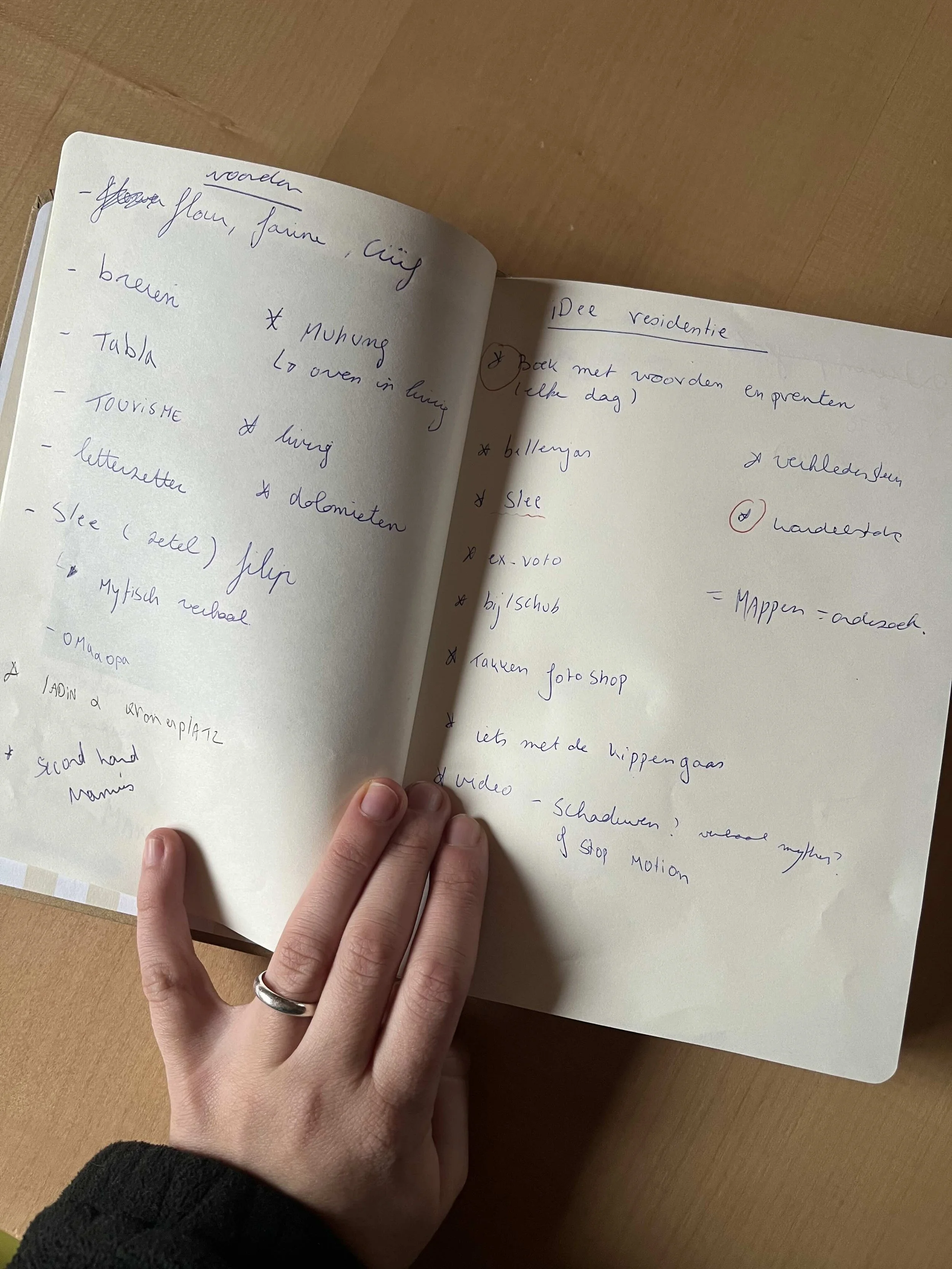
Jeremy Deller once wrote: "Tourism is surely a form of pilgrimage."
Perhaps I am also here on a kind of pilgrimage. To slow down. To gain new insights into my artistic practice. To get to know better the surroundings I experienced one summer ago, but knew so little about at the time.
Tourism turns out to be a complex matter.
It has brought economic growth to this region, but at the same time, it is beginning to weigh heavily on the landscape. Not only through the pressure it places on the natural environment and the disruption of non-human animals' habitats, but also through the way the region increasingly adapts itself to the expectations of its visitors.
Due to climate change, less and less natural snow is falling. To keep the ski slopes covered, artificial snow is produced on a large scale. This requires enormous amounts of energy and water. Water is often drawn from local lakes and rivers, increasing the pressure on already limited water resources. The local environment, residents and agriculture all feel the consequences.
Economic inequality is growing too. Ski passes are becoming increasingly expensive, while the housing market is becoming less and less accessible to local residents due to large investors and the growing number of second homes.
Tourists are also increasingly staying within the boundaries of their all-inclusive resorts, contributing less to the local economy.
And yet, there is also a positive attitude towards tourism. It continues to provide employment and jobs that are essential for many families and local businesses, especially during the winter months.
Tourism brings life, but it also demands something in return.
Where is the line between welcoming visitors and protecting the very place that attracts them?